Stalin
-
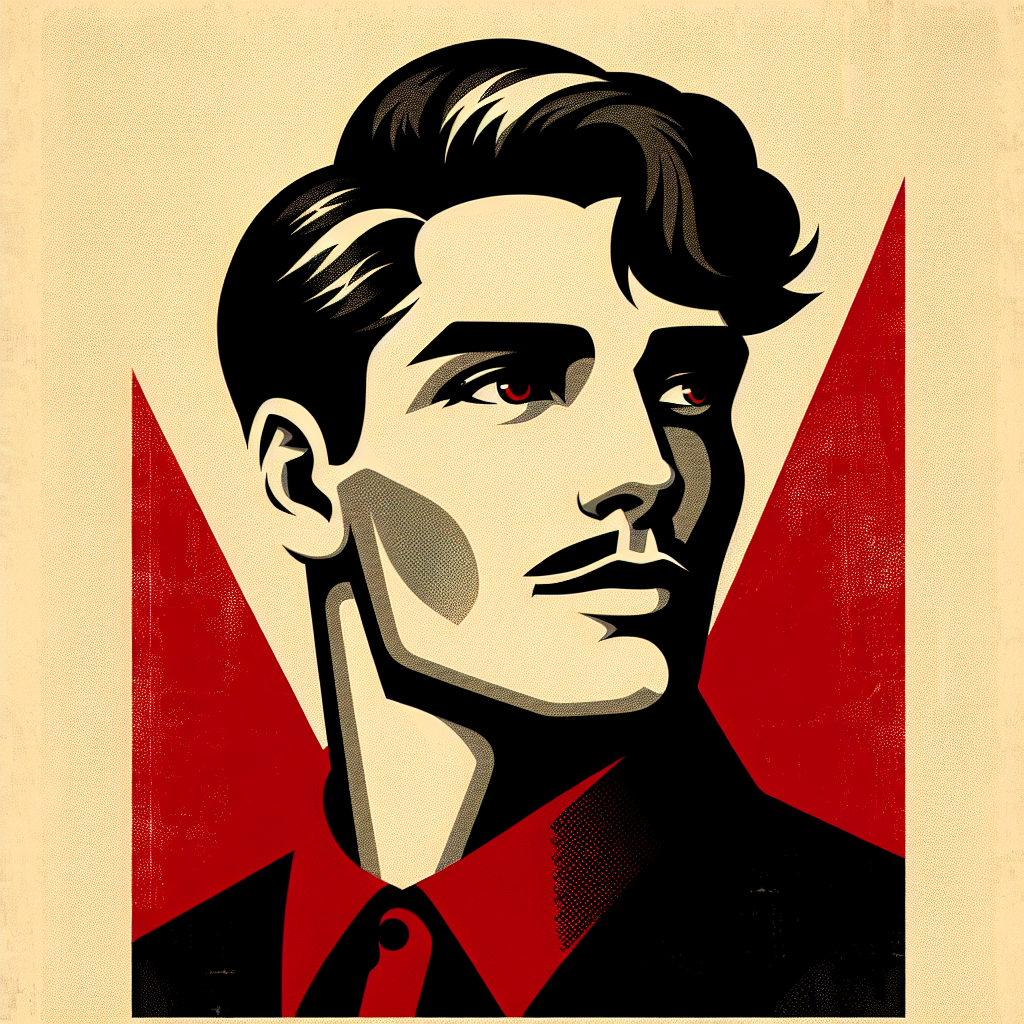
Time for #EuropeanBios entry #83; Joseph Vissarionovich Stalin, an absolute sociopath who turned an ideology into a religion and then murdered millions and millions of people in the name of that religion. He also loved movies, wrote lyrics for musicals, and was super hot.
-
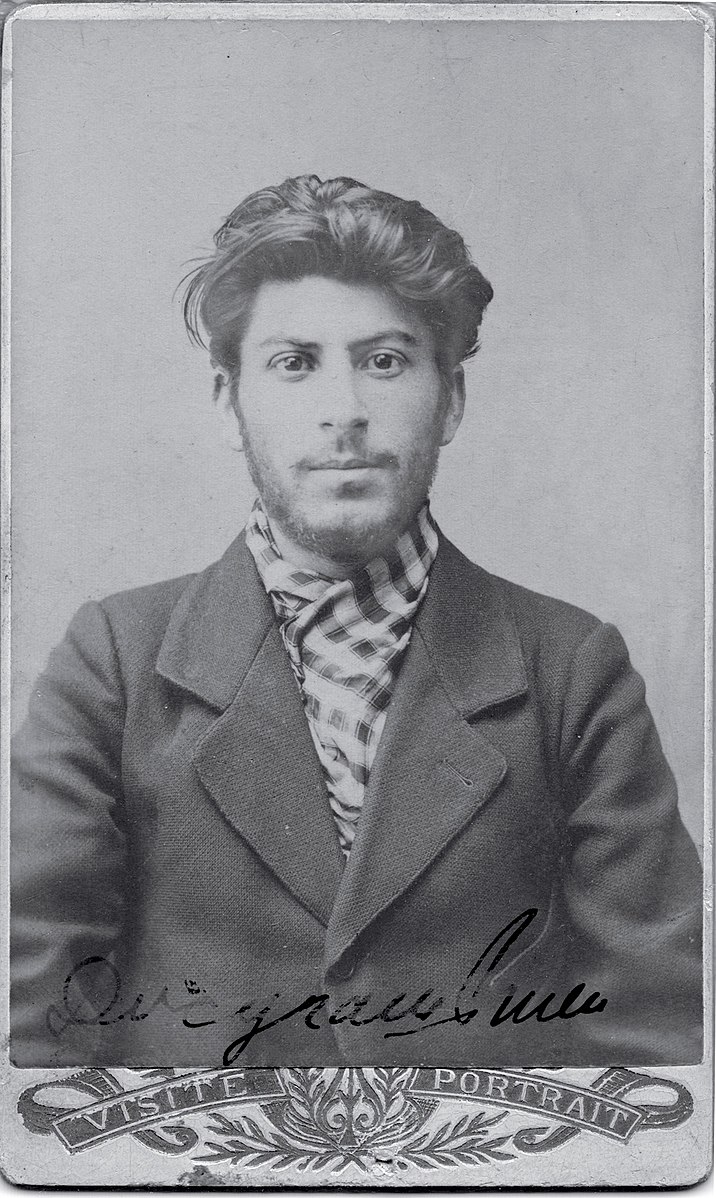
Young Joseph Stalin (Ioseb Jughashvili), Okhrana surveillance photograph, 1902, public domain public domain -
It's impossible to talk about Stalin without talking about Lenin, so if you haven't already read the thread about Lenin now's a great time, because I will be referring to people and events without re-introducing them:
-
Stalin was born Ioseb Besarionis dze Jughashvili in 1878 in the town of Gori, in Georgia. It turns out it was the fashion among revolutionaries to give themselves a cool "code name". He chose Stalin, which means "Man of Steel" and echoes "Lenin" (itself an invented code name).
-
His birthplace is very significant because it meant that while he considered himself Russian, lots of his compatriots did not: they considered him Georgian, and having a Georgian run Russia rankled them, but if they ever said so out loud Stalin had them killed so they shut up.
-
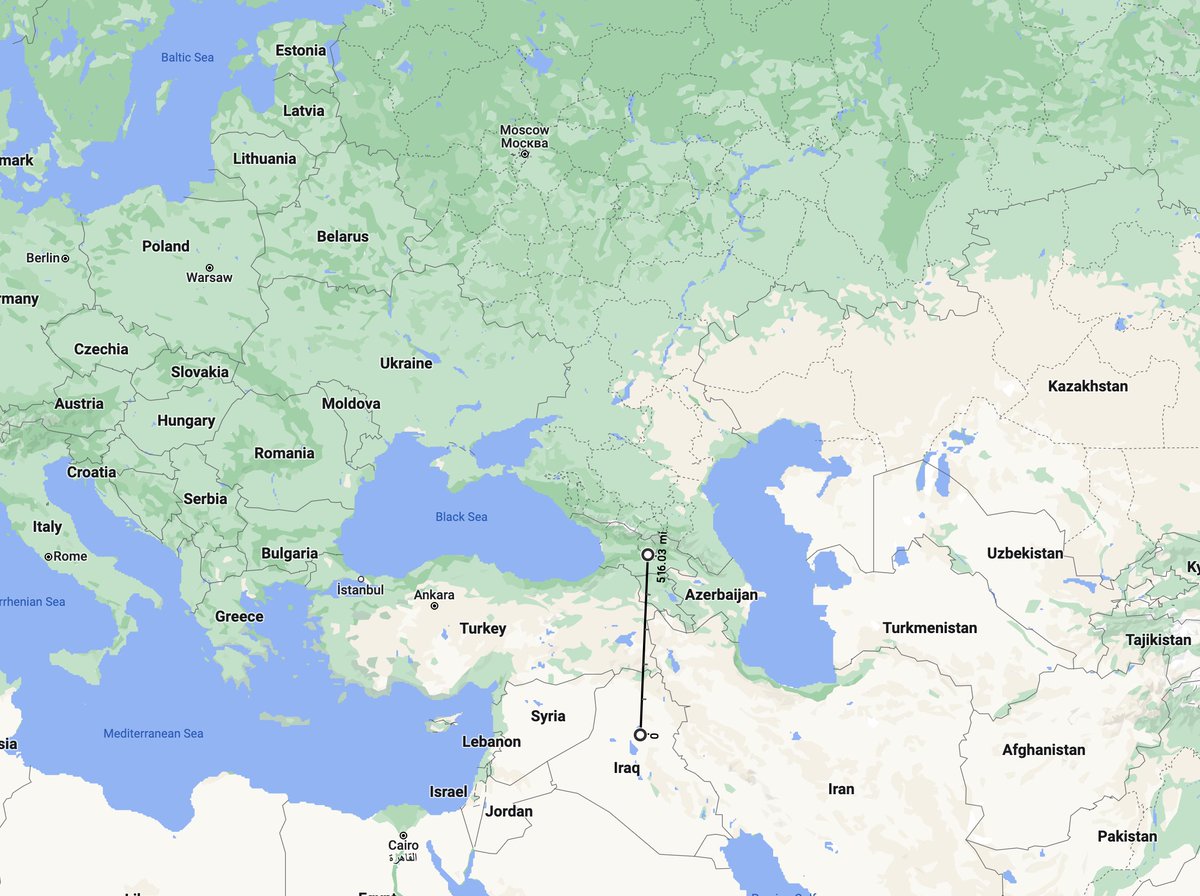
Map showing the 516-mile distance between Stalin's birthplace (Gori, Georgia) and Saddam Hussein's birthplace (Tikrit, Iraq) Google Maps data © Google -
Another significant fact about being Georgian is that Stalin was born only 500 miles away from where Saddam Hussein was born, and in fact they have a certain resemblance. Hussein was extremely aware of this; he talked about it a lot and cultivated his appearance to accentuate it.
-
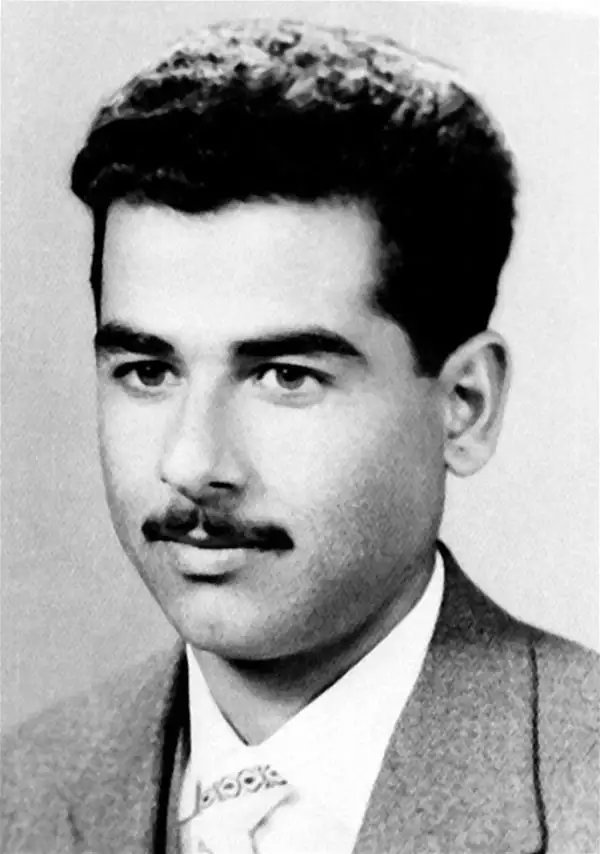
Young Saddam Hussein, c. 1950s, public domain public domain -
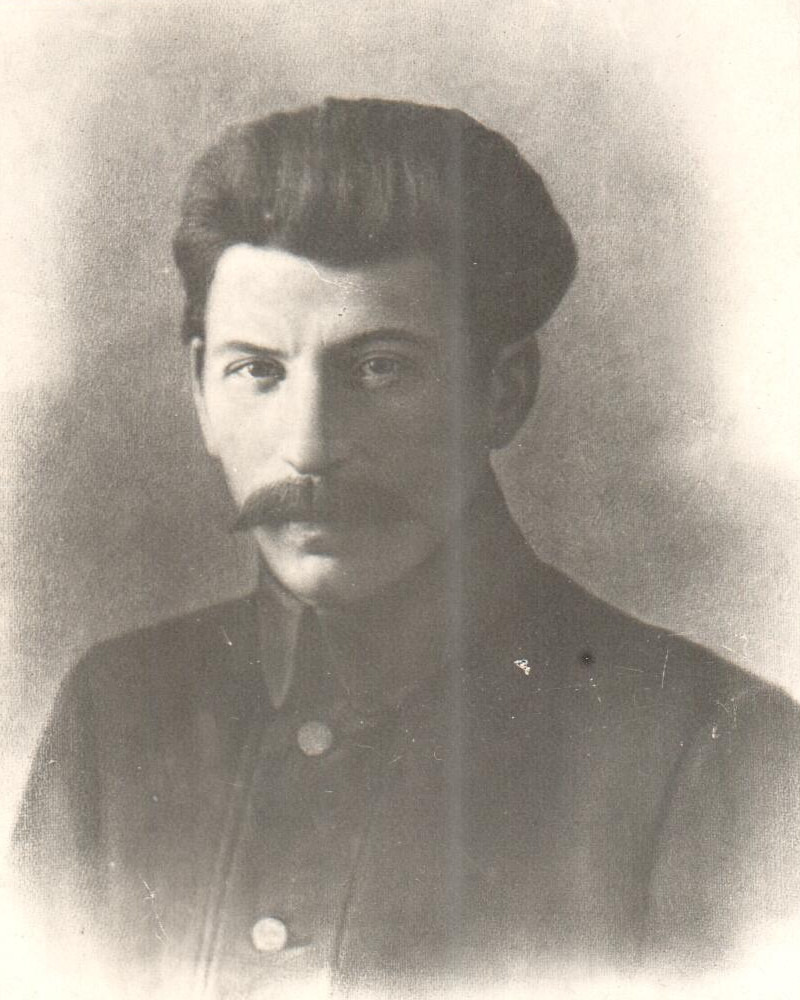
Young Stalin, c. 1915, public domain public domain -
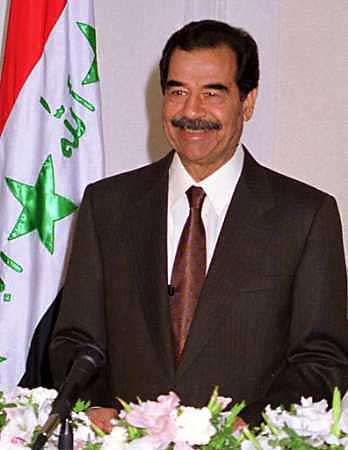
Saddam Hussein, President of Iraq, c. 1980s, public domain public domain -
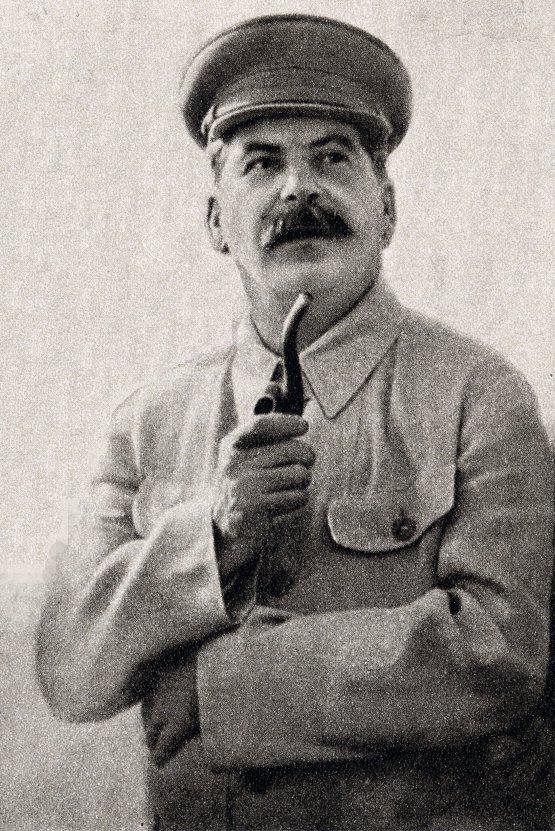
Joseph Stalin with pipe, c. 1930s, public domain public domain -
Stalin's childhood was somewhat impoverished and not particularly happy. His father was an abusive alcoholic, so he and his mother left when Stalin was 5. He was however exceptionally intelligent, which earned him a scholarship at a religious school with high academic standards.
-
At school he was literally a choir boy, and one of the many incongruous facts about Stalin is that he was an exceptionally good singer, of professional calibre. He loved to sing and was constantly doing so whenever he got drunk, which was quite a lot of the time.
-
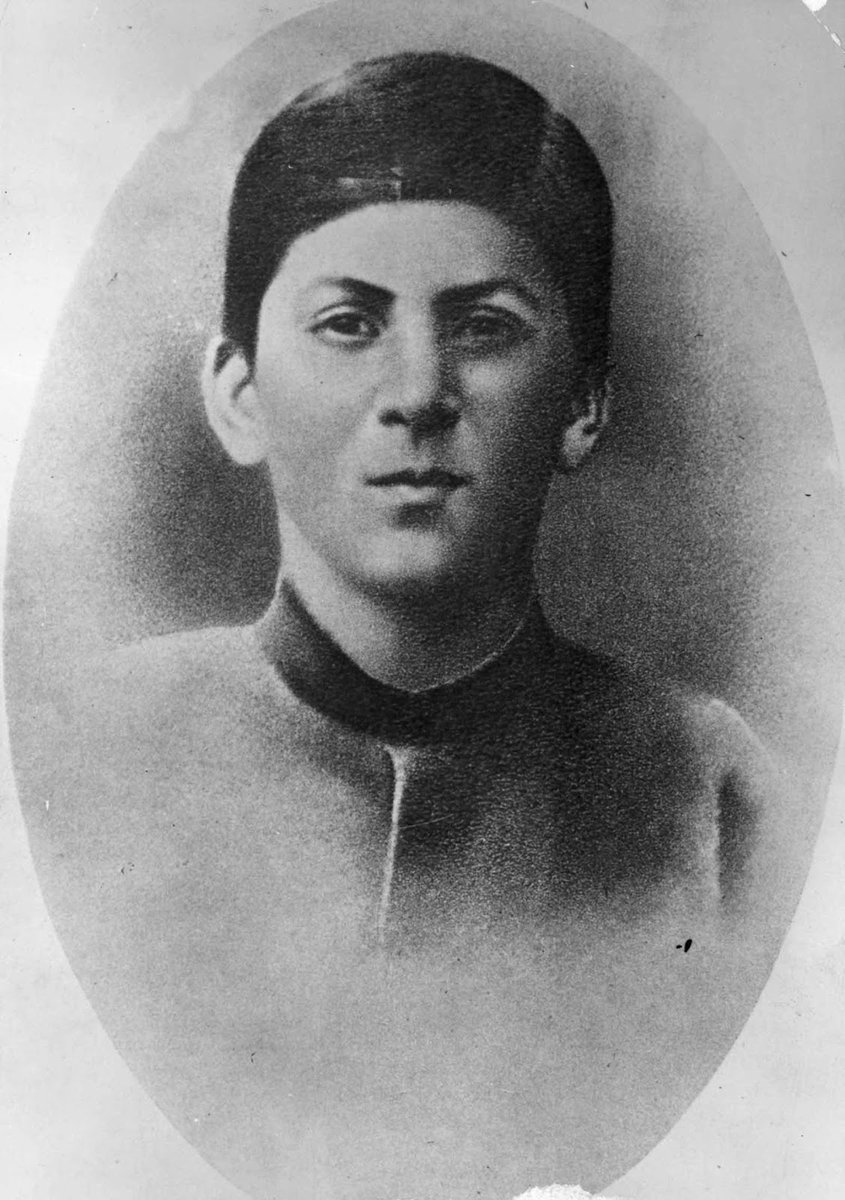
Stalin as a young seminary student, c. 1890s, public domain public domain -
As a teenager he read Das Kapital and fell in with fashionable, revolutionary kids. He was a prodigious reader all his life, a huge nerd, constantly reading literature, reciting poetry, and studying history books for ideas about what to do in his own political life.
-
He was also hot as hell. Quite apart from the photographic evidence (you have to mentally edit out the mustache), it is also endlessly remarked upon in the historical record. Women were all over him. He had very beautiful "honey colored" eyes and, as mentioned, a lovely voice.
-
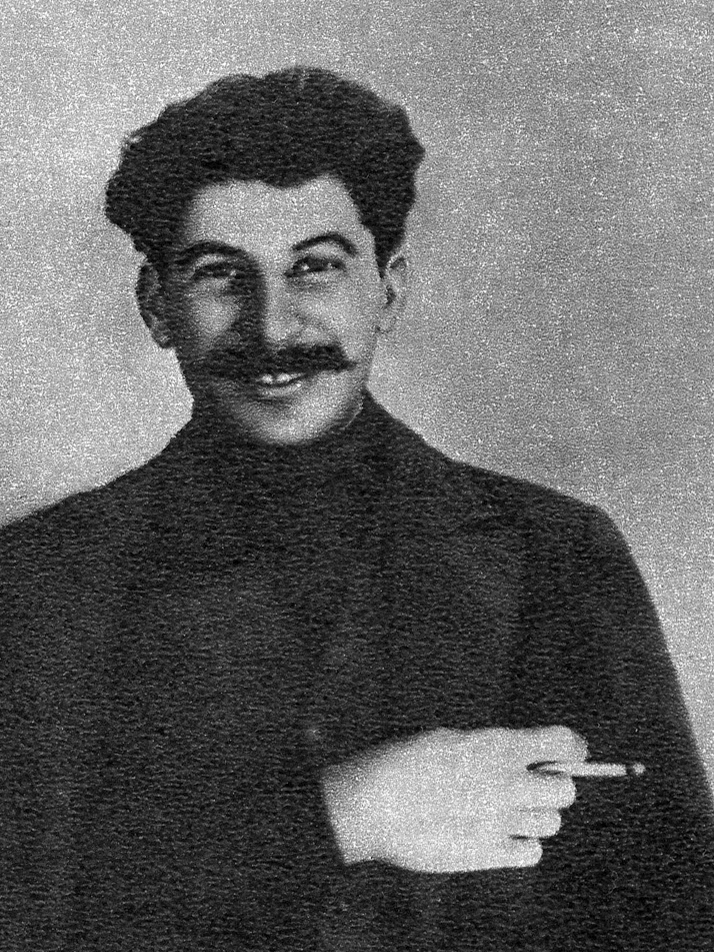
Young Stalin smiling with cigarette, c. 1910s, public domain public domain -
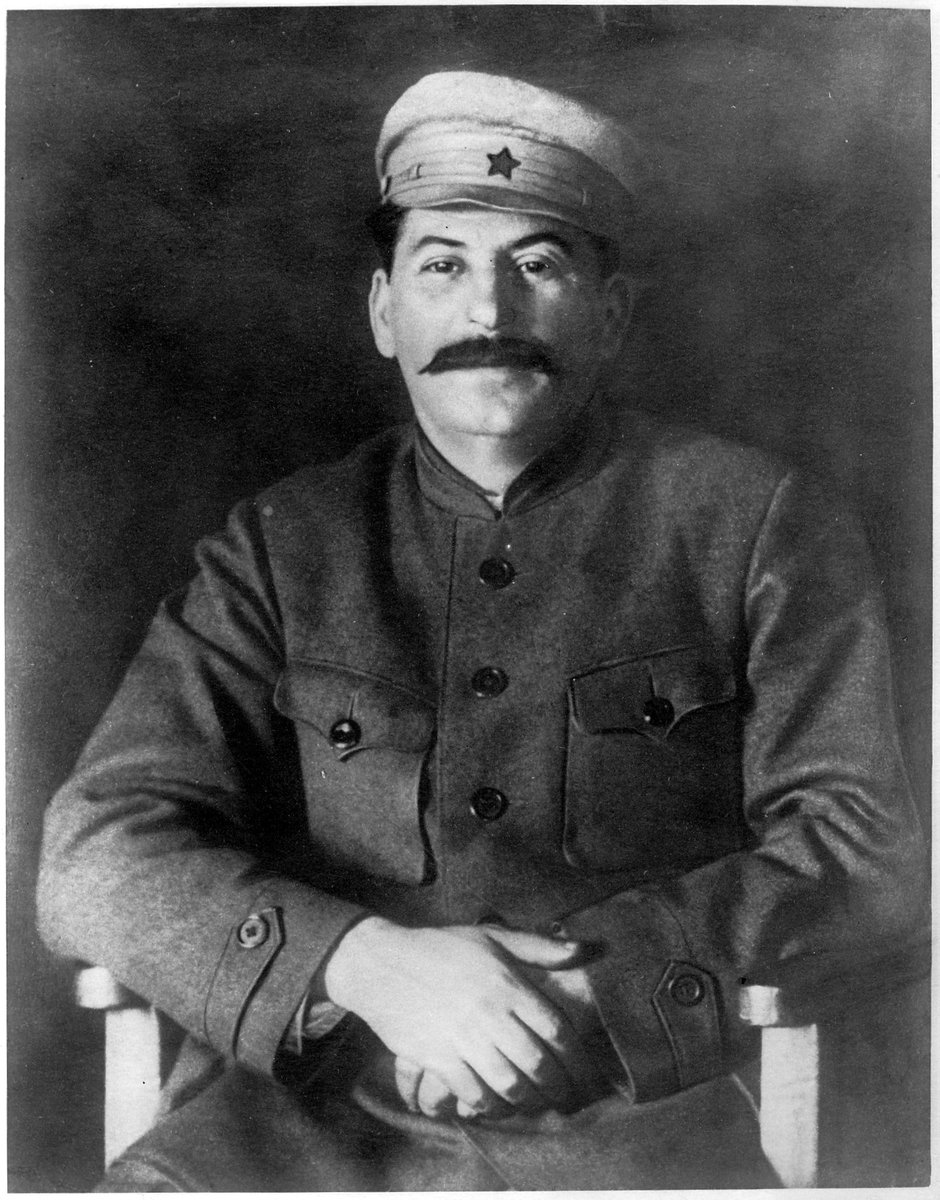
Joseph Stalin in military uniform with red star cap, c. 1920s, public domain public domain -
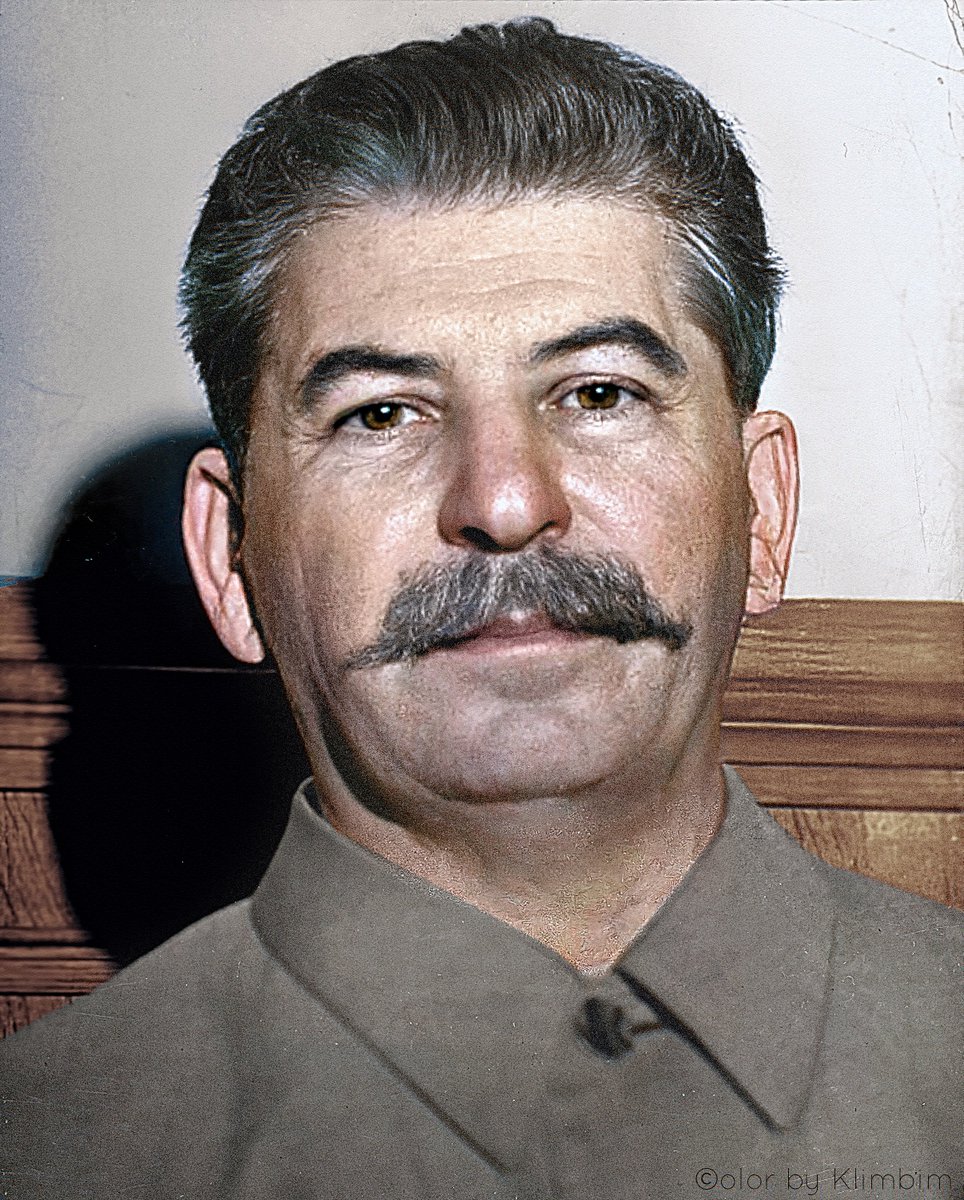
Colorized portrait of Stalin showing his famously honey-colored eyes, c. 1930s colorization © Klimbim -
It all adds up to a picture of a rather nice man: affectionate, creative, intelligent, he was popular with the ladies and good with kids. He was fun at parties. But unfortunately he was also a ruthless sociopath who, as mentioned, killed just millions upon millions of people.
-
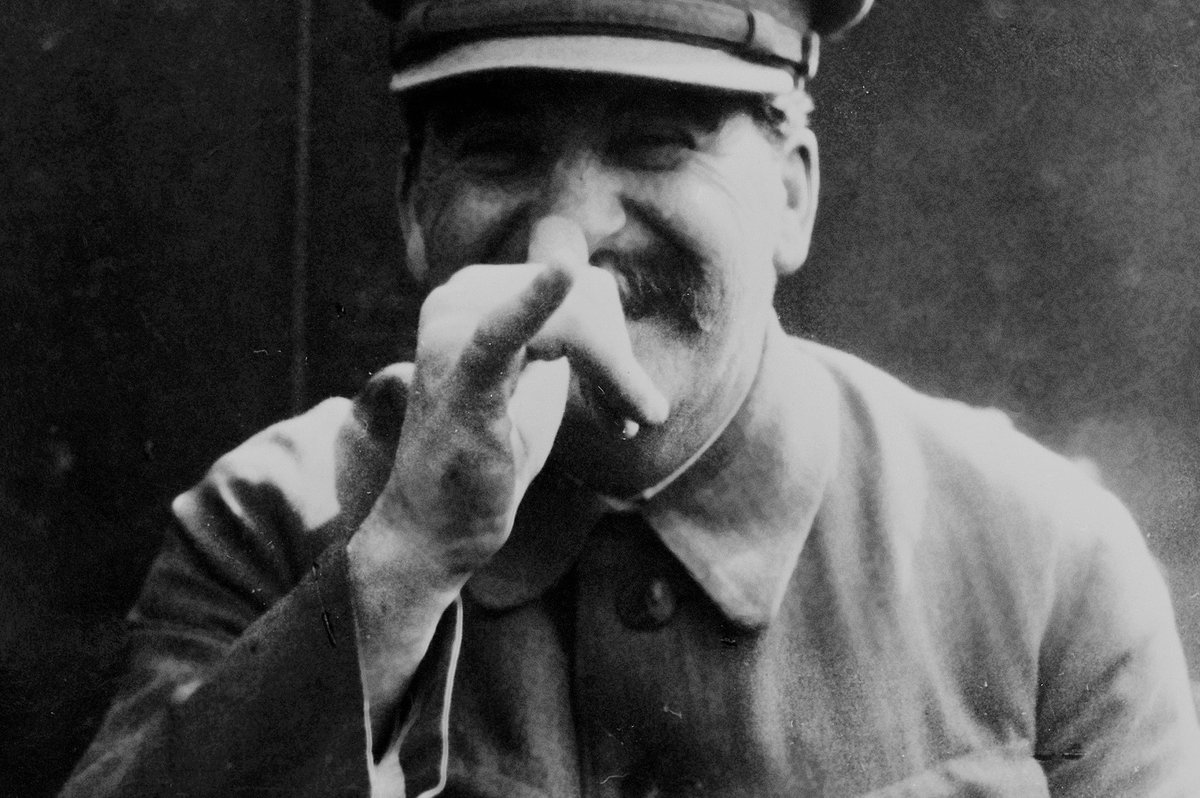
Stalin laughing, c. 1930s, public domain public domain -
When Stalin came to power, still under Lenin, Russia had only just exited world war 1. War had left the country poor and hungry. Stalin made this significantly worse with disastrous attempts at collectivization of farms, which led to famines that killed millions.
-
Stalin's story really gets underway at the death of Lenin. As mentioned, Lenin had not planned for a successor properly but *had* been clear that if it was going to be anybody it shouldn't be Stalin. But when Lenin had a stroke Stalin managed to seize power and cover that all up.
-
Lenin had taken Marxism and twisted it into something unrecognizable for his own vicious ends. Stalin took this hypocrisy even further, to the point that Stalinism stopped being an ideology and became a religion, not in a metaphorical sense but an extremely real, practical way.
-
The thing about a religion vs. an ideology is that an ideology must be consistent: it is defined by its principles. Religions famously are not. It's also allowed, even encouraged, to question ideology: religions don't like that. Most importantly, religions demand faith.
-
The horrifying history of the USSR under Stalin is deeply confusing until you change your mental framing from "the ideology of socialism took over the country" to "a murderous religion that called itself socialism took over the country". The contradictions are explained.
-
Stalin probably didn't think of socialism as a religion but he certainly acted like it was. Anything could be done in the name of socialism, even capitalism, as long as the "socialist" party was kept in power. He had some people killed just because they "lost faith" in socialism.
-
Which brings us to the murdering. The murdering started the very moment he came to power, because he needed to get rid of anybody who knew Lenin well enough to know he hadn't wanted Stalin to be in power, and also anybody who was powerful enough to challenge him for leadership.
-
Because he was not yet absolute ruler, his initial murders had pretensions to justice. He required that some crime be committed to justify execution. However, since he was completely on board with torturing people, confessions to crimes, even nonsensical crimes, were easy to get.
-
A macabre repeating trope of Stalin's terror is confessions, sometimes literally spattered with the blood of the victims, which they not only signed but initialed on every page. Stalin often mentioned "they signed every page", but of course the entire confession was made up.
-
Like all religions, any failure of the religion could be attributed to simply not having enough faith. The USSR under Stalin was rife with corruption and inefficiency, which led to disastrous mistakes, but every mistake could be and was blamed on not socialisming hard enough.
-
The solution to anything going wrong, under Stalin, was to find out who was to blame and denounce them, which usually led directly to their execution. Train late? Kill the driver. Crops failing? Murder the farmers. Losing a war? Execute the general, or the soldiers, or both.
-
This of course created a vicious circle, because anybody with any level of technical expertise was constantly being murdered as retribution for any mistake, and their replacement would inevitably be somebody less competent but more faithfully "socialist", who made more mistakes.
-
As the mistakes multiplied, so did the retribution. Confessions through torture were now no longer obligatory, merely being denounced was often sufficient. People began to pre-emptively denounce anybody they thought might try to denounce them, out of self preservation.
-
Eventually there were so many mistakes that they abandoned even denouncing people. It was assumed that in a population of 10m people in an area probably 10,000 of them were "anti-socialist wreckers" and that region would be given a quota: kill that many, doesn't matter who.
-
Of course, given a quota to kill tens of thousands of people, people administering regions would spare their family and cronies and kill other people instead. Sometimes in an effort to show willing they would even go over quota, killing thousands more than had been asked for.
-
Estimates of exactly how many people died are hard to come by, but even the smallest estimate is 3.2 million people. Estimates of how many Stalin deliberately had killed rise to 6 million, with an additional 10-15 million killed essentially by accident, through mismanagement.
-
The result was a gigantic country being run like an absolute clown show. Nobody competent was in charge of anything, everything was falling into ruin, and pointing this out would certainly get you killed, so everybody just pretended like everything wasn't in total disarray.
-
The one person who didn't pretend everything was fine, because he didn't have to, was Stalin. Extremely intelligent and energetic, he personally micromanaged the entire country, simultaneously the reason everything was fucked and the only reason it didn't collapse entirely.
-
One result was the Soviet pact with Nazi Germany in 1939. Stalin really didn't want to go to war with Hitler, because he knew exactly how incapable and under-resourced his military really was. Through bluff and bluster, he instead got Nazi permission to take over whole countries.
-
This went well initially since the countries involved were so scared of Germany that they capitulated without a fight. When Finland actually fought back, it was a disaster for Russia: they lost men at 3 times the rate of the Finns, who managed to fight them to a standstill.
-
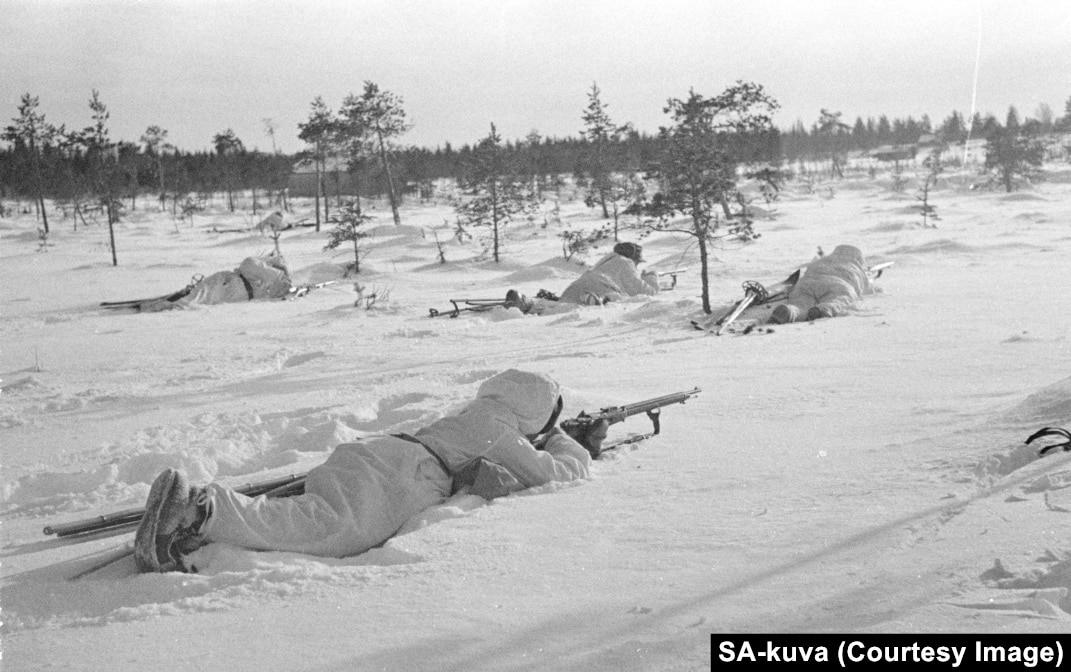
Finnish soldiers in snow camouflage during the Winter War, 1939-1940 SA-kuva (Finnish wartime photographic archive) -
Obviously credit to the Finns for heroic resistance, but internal communications from the invading Russian army make it clear that they were deeply incompetent. For example, they were surprised to discover forests in Finland, and hadn't planned how to get tanks through them.
-
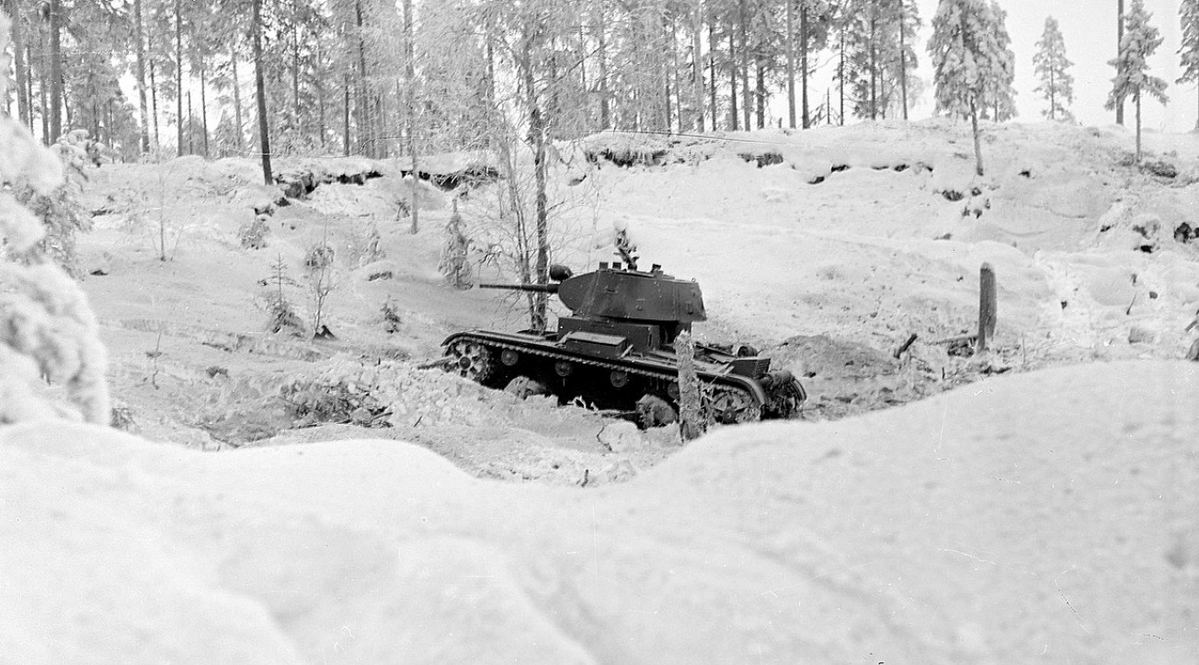
Soviet tank stuck in Finnish forest during the Winter War, 1939-1940, public domain public domain -
So in 1941 when Germany broke the treaty and invaded Russia, Stalin had spent months hoping increasingly desperately that they would not do so, because he knew better than anyone else how totally unprepared Russia would be. When they did, he literally had a mental breakdown.
-
The invasion started in the middle of the night, and the state of Russia under Stalin was such that it devolved immediately into farce. Absolutely nobody wanted to be the person who woke Stalin up to give him bad news, and for security reasons nobody was sure where he was.
-
When they finally did locate him and wake him up, Stalin mentally collapsed. Saying "Lenin left us a great state and we fucked it all up", he retired to his bedroom and didn't come out for two days, when his increasingly panicked second-in-command cronies came to get him.
-
When they did finally come to get him, Stalin was clearly expecting that he was about to be arrested and imprisoned for incompetence. But he had murdered anyone remotely capable of replacing him, so instead they forgave him all his mistakes and begged him to stay in power.
-
Thus an absolutely unprepared, incompetent Russian military was thrown into world war 2. They didn't have tanks. They didn't have artillery. The trains couldn't move troops around. The generals in charge were suck-ups who genuinely believed that cavalry were better than tanks.
-
Historians often note the enormous human cost of the second world war to Russia and it's true, but the reason they had to sacrifice millions upon millions of people is because people were almost all they had. They just threw people into the meat grinder until it jammed.
-
In order to encourage heroism, Stalin forbid the military to dig trenches, so they were mown down en masse. Chaotic battlefield communication meant they routinely misplaced whole divisions of tanks and men. Millions of soldiers died because of totally incompetent leaders.
-
What saved Russia was two things: first, China agreed not to attack, allowing Stalin to transfer whole armies from the east to the west as reinforcements. And second, of course, the US and UK agreed to give them the tanks and artillery they so desperately needed.
-
Stalin's meetings with FDR and Churchill involved no shortage of farce. They had long dinners in which everyone got extremely drunk (although Churchill notably out-lasted everyone else and didn't understand what all the fuss was about) and desperately tried to get along.
-
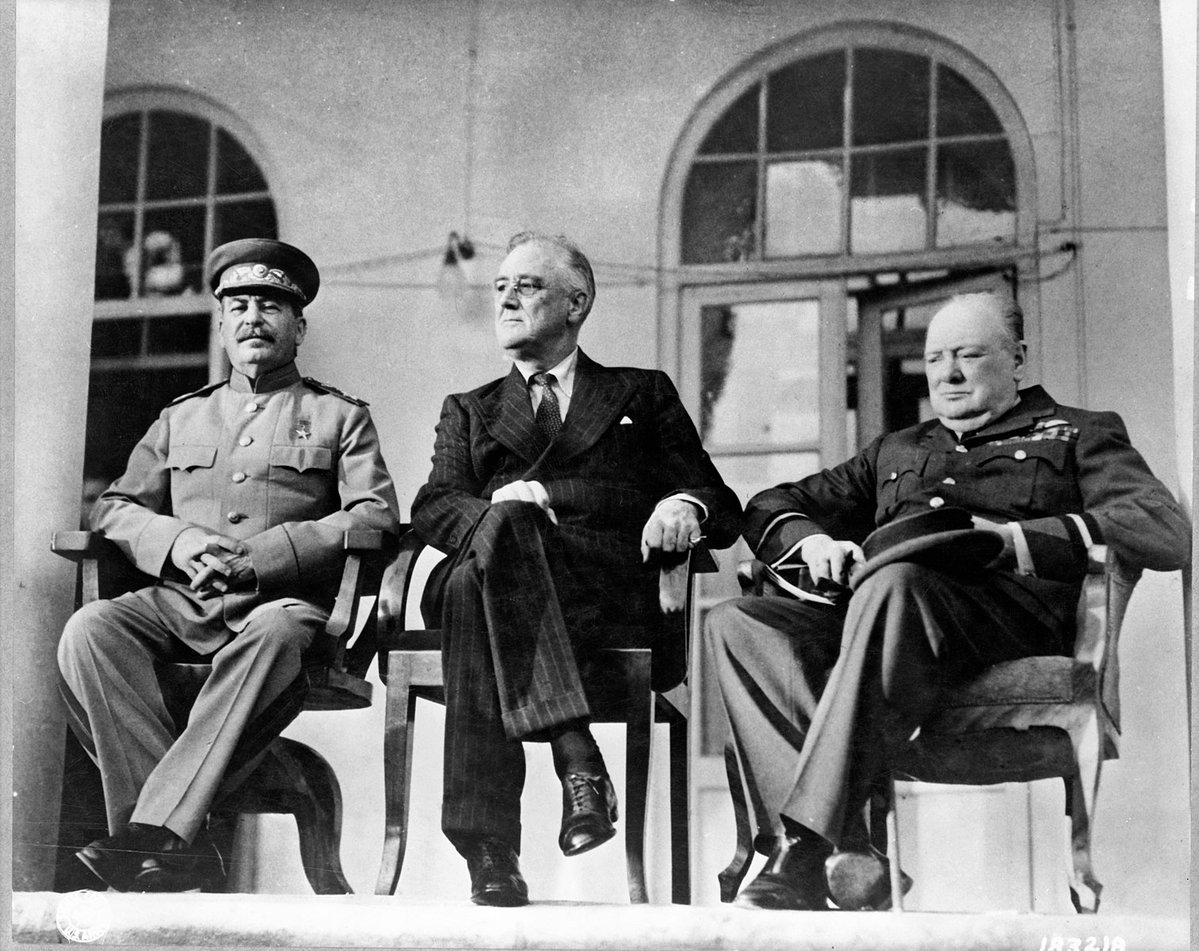
Stalin, Roosevelt, and Churchill at the Tehran Conference, 1943, public domain public domain -
Relations between FDR, Stalin and Churchill were constantly strained. Each was terrified of the other two ganging up on them, so they were always trying to outdo each other with friendliness and camaraderie, up to and including ignoring each other's many, many war crimes.
-
This included America's totally superfluous use of atomic bombs on Japan. Stalin thought Truman "neither educated nor clever" (correct) and described all war as "barbarity" but Hiroshima a "super barbarity", which if you think of Stalin's track record is really saying something.
-
Victory in WW2 changed Stalin. He abandoned all pretensions of consensus and ruled by decree. Exhausted by the war, he abandoned micromanagement and instead made vague hints about what he wanted done, vague enough that if anything went wrong he could claim he was misunderstood.
-
It also kicked his cult of personality into overdrive. His suck-ups demanded he take a new title, adopting "Generalissimo", and followed him around with a medal, literally sneaking up with it hidden behind their backs until they could finally pin it on him.
-
Stalin's lifestyle changed after world war 2, to a sort of bizarre insomniac hedonism. He would sleep until noon every day, then read reports from his lieutenants (all lies), order a few hundred more executions, and then retire with his cronies to watch movies and get drunk.
-
"Watching movies with Stalin" was not some occasional event, it was effectively how governing was done. His most powerful cronies would show up for a late supper, get extremely drunk, and then start watching movies at midnight until Stalin finally got bored and fell asleep.
-
These dinners were more farce. While Stalin slyly toasted with water, his generals would get so drunk they threw up. They got into frat house games, with "kick me" signs and pushing each other into the pond until staff got so worried one of them would drown they drained it.
-
The movies were put on by whoever was the head of cinematography for the entire USSR at that time (there were several in rapid succession, he kept having them executed) whose terrifying job was to guess from Stalin's mood what kind of movie he'd be in the mood to see that night.
-
Stalin loved movies. He watched westerns, comedies, dramas; a big chunk of his movie collection had been looted from the collection of a senior Nazi when they invaded. His favorite was Volga Volga, a schlocky drama that he watched over and over.
-
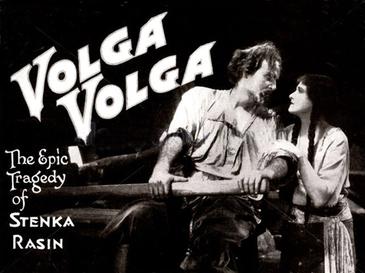
Title card for Volga Volga (1938), Stalin's favorite film, public domain public domain -
No movie was allowed to be shown in the USSR without Stalin personally approving it, so when he went on summer holidays a huge backlog of films would build up that were not authorized, and he'd have to watch them all. He often gave directors specific feedback on things to change.
-
Being a singer, he particularly enjoyed musicals. In his rule as supreme movie watcher he once wrote new lyrics for a musical when he decided the original wasn't punchy enough and had them delivered to the director, who -- since the alternative was death -- included them.
-
Meanwhile his hangers-on had abandoned any show of socialist equality. They lived in palaces, flew private planes, they had their own personal haute couture designer who made all their outfits (including Stalin's flashy post-WW2 military uniforms).
-
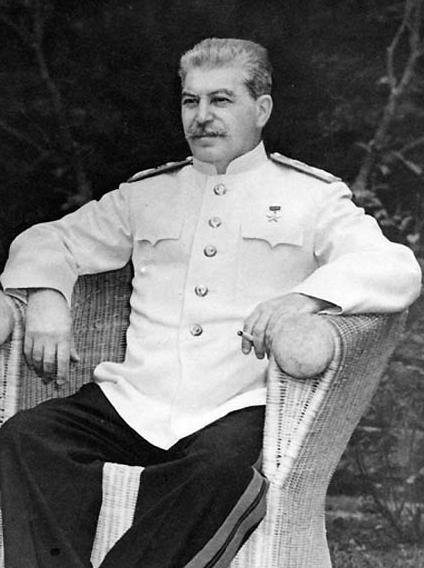
Stalin in his post-WW2 military uniform, c. 1945, public domain public domain -
The intense stress of micromanaging an empire, years of drinking and his insomniac lifestyle took their toll and Stalin's health was poor in later life. He took increasingly long vacations and took an ever more hands-off approach to running the empire.
-
His death may or may not have been natural. He died of a cerebral haemorrhage, but it took him several gruesome days to die, during which time he got only minimal medical attention. It's not clear if treatment was deliberately withheld, or just through incompetence and fear.
-
Stalin's legacy is a nightmare. He took Lenin's evil mutant ideology and turned it into a murderous creed that killed tens of millions indiscriminately and kept many times that number in poverty and misery. He is the ultimate proof that we let hot people get away with anything.
-
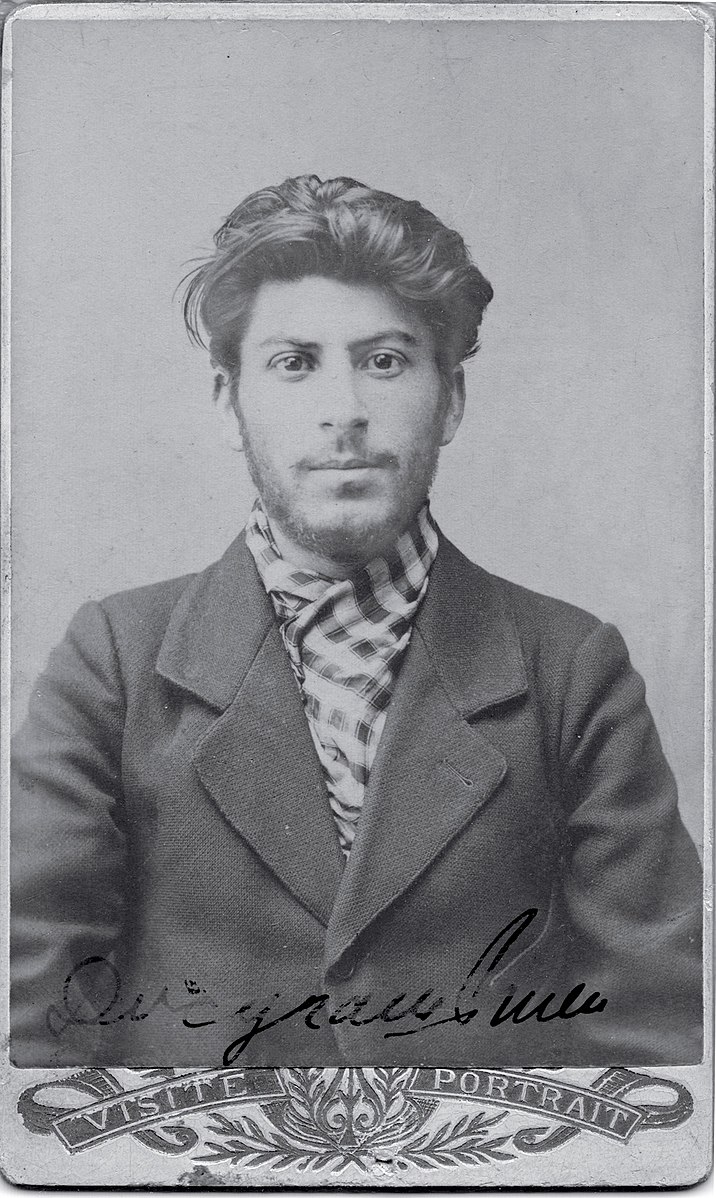
Young Joseph Stalin, Okhrana surveillance photograph, 1902, public domain public domain
- Previously: Lise Meitner
- Next: Virginia Woolf
- Full list
Text and images copyright © 2020-2023 Laurie Voss
except where indicated
except where indicated